Winter Gardening in Canberra: 11 Essential Jobs to Prepare Your Garden for Spring
By Jesper Ginnivan
Founder, Ginnivan Gardening
With winter in full swing in Canberra, the chilly conditions don’t necessarily mean a quiet season in your garden. In fact, it’s the best time to prepare your garden landscape for the warmer months. In contrast to the brutal dry heat of summer, a sunny Canberra winter day can provide far more optimal conditions to carry out prolonged work outside in the garden, especially for those who are more sensitive to heat.
Winter is one of my favourite times of the year to work in the garden. Admittedly, since I tend to so many other people’s gardens, by the time winter rolls around, my own garden is a neglected mess, or at best - controlled chaos. For me, nothing beats an early morning visit to the farmers markets on a chilly Saturday followed by hours of pottering around tending to a variety of tasks in my garden under the winter sun.
With plants entering dormancy and with growth slowing down, we are given the chance to play a bit of ‘catch up’ on our gardens. A little work now, in the off season can set up your garden for healthier, stronger plants and more abundant, prolific flowering and colours in the warmer months. Likewise, without the harsh heat of summer, it makes landscaping tasks much more manageable - from levelling out uneven pavers to doing simple retainer wall patch ups.
Here are some of the best gardening and landscaping tasks to focus on in your garden this winter
1. Prune Deciduous Trees & Shrubs
With all deciduous plants laid bare and leaves gone, we are given a clear view of branch structure making it easier to identify and remove damaged, crowded or diseased growth. Giving deciduous plants a good winter prune results in better airflow through the plant, encouragement of rejuvenated spring growth and reduces the risk of disease. One good example is Japanese Maple - a tree which we tend to frequently in many Canberra gardens which will richly reward you in the summer months if given a proper winter prune. Plants like the Japanese Maple, after their autumn shed, usually have weakened, dead twigs and branches that should be cut away to encourage renewed growth. Likewise, any congested branches crossing over and pressing against each other should be tended to - choose the branch that is leading inward toward the crown of the plant and cut it right back away from the other branch. Reducing structural congestion allows light and air into the crown of the plant which boosts growth and density and quality of foliage in the summer.
Some deciduous shrubs prefer a more ruthless winter pruning. Certain varieties of large flowered, summer flowering ‘group 3’ variety of Clematis, can be cut right down to 20-30cm above ground level which will encourage an explosion of abundant flowering and new growth in the summer. I do exactly this to my group 3 Clematis’s every winter and without fail, they perform prolifically when summer comes around. Other deciduous woody climbers like the Trumpet Creeper vine flower from new season’s growth, so much of its weak, twiggy bare branches can be pruned hard back to the strongest, established lead shoots of the plant. In fact, just this week I did a hard prune on my very neglected trumpet creeper, which will now put on a stronger display of flowers and colours come summertime. Shrubs like deutzia or salvia can be cut down to as much as a third of its current size. I cut each cane of my deutzia down to barely a half meter above ground level, likewise I remove up to 70% of my salvia’s old twiggy growth in the winter. Without fail, both shrubs reward the pruning with vibrant colours and strong growth in the early summer.
Regardless of the deciduous plant you are pruning, ensure that you are using sharp, clean secateurs or loppers and, generally speaking, make each cut just above outward facing buds where it’s possible.
- Prune Roses
When roses are left to grow unchecked, with time they can quickly become leggy, wispy and unruly. A neglected rose bush will often be riddled with diseased foliage, dead wood and weak flowering. To encourage vigorous summer growth and increase the quality and duration of flowering, winter pruning is a must. However, pruning roses generally takes a touch more care and attention to detail than other deciduous shrubs. Generally, the aim with a rose is to establish and maintain an open vase-shaped structure for the plant. All crowded and congested shoots in the centre of the plant should be cut away. Strong shoots that grow outward to form the vase structure should be kept. Likewise, all dead, diseased or damage foliage or stems should be completely cut back. Ands as with most pruning tasks, each cut should be made above outward facing buds to encourage outward growth.
If you have a climbing rose, the approach is a little different. By and large, the structure of your climbing rose should conform to the trellis or structure you are trying to grow it up. Ruthlessly cut away all dead, diseased or damaged growth and cut away any smaller shoots that are pressing against strong lead shoots. Similar to rose bushes, growth should be encouraged outward and upward, so ensure that all cuts are made above outward facing buds. Tying or reinforcing failing ties on your climbing rose to the structure it is growing against is also a useful task in winter with the absence of excessive foliage to contend with. With rose bushes and climbing roses, use a sharp, clean pair of secateurs - ‘Felco 2’ secateurs are our favourite tool of choice.
As for rambling roses like the legendary Banksia rose, because their growth rate is so extreme and vigorous these roses will require less finesse and can be cut back quite aggressively to conform to the fence line or structure it is growing on - a power hedge trimmer or a big pair of sharp hedge shears will do the job.
- Plant Bulbs and Shrubs
Planting flower bulbs and shrubs is right up there on my list of favourite winter tasks. Flower bulbs like daffodils, jonquils, dahlias are best planted as bulbs straight into the ground or pot during the dormancy of winter (or better yet, late autumn). Flower bulbs are one of the cheapest and most reliable ways of bringing perennial colour to your garden which will put on a show of flowers every summer. Many spring or summer flowering bulbs rely greatly on a good, chilly winter in the ground in order to encourage strong rebound growth in the warmer months.
Likewise, winter is the perfect time to install new trees, hedges and shrubs. Cooler temperatures allow root systems to establish themselves without the stress of summer heat. Some of the best trees or shrubs to plant in the winter include Japanese Maples, Magnolias, Camelias (they love the cold!), deciduous ornamental trees, native shrubs and screening plants. However, keep in mind, if the seedling being planted is still quite small, ensure that you protect the plant with an old pillowcase or cloth cover on any nights that plunge below freezing. By rule of thumb, if temperatures drop anywhere below 0 degrees, I make sure any smaller seedlings in my garden are well protected from potential frost bite.
- Refresh Garden Mulch
Mulch is one of the simplest gardening hacks. I have wholly transformed previously struggling, dried out and sparse garden beds into thriving dense gardens simply by applying a generous layer of mulch to the soil. With cooler ground temperatures and increased moisture in the soil, applying mulch in the winter is the perfect time to lock in moisture into the ground so that the soil condition is optimal for micro-flora to explode in the spring when soil and air temperatures begin to rise. Likewise, roots of more frost sensitive plants like Cana Lilies, Salvia Amistad will be more protected by a good layer of mulch. Applying mulch now also ensures that any winter weeds and the inevitable wave of spring weeds will be reduced greatly or even stopped altogether in some garden beds. Aim for a layer approximately 50-75mm deep while keeping mulch clear of plant stems and trunks. I like to gentle pull back any much from the base of the stem or the trunk of the plant to form a small ring around the base of the plant. Be mindful of what mulch you choose as some varieties of mulch are more acidic than others and may not be optimal for certain plants. For the most part, hardwood chip is a robust, long lasting and fairly neutral acidity mulch which works in most garden beds with mixed plants. For garden beds with mostly or only native plants, fine chip eucalyptus is a great option - it adds a crips, golden colour which makes the garden ‘pop’ more visually and is environmentally friendly. However, it is more acidic which can aggravate certain sensitive plants. For vegetable gardens, you can’t go wrong with pea straw mulch! Works wonders for any vegetable garden; it adds a nice light aesthetic and is light and easy to distribute.
- Improve Your Soil
All healthy gardens start with good, rich soil. Winter is the perfect time to add compost, aged manure and soil conditioners to your garden beds. With cooler temperatures, the labour-intensive work of moving and dumping loads of soil is significantly easier than in the summer heat. If you have any dry, solid, parched patches of poor soil (very typical of Canberra, particularly in newer suburbs) in your garden where plants struggle to grow plants, my favourite approach is to 1. drive a pitchfork deep into the soil within this area and thoroughly turn and loosen the soil. 2. Remove the top layer of poor soil and add rich compost and manure. Add fertiliser pellets or liquid fertiliser then 3. Thoroughly turn the soil with a pitchfork and shovel. Be mindful of surrounding plants and their root systems. If working in a crowded garden bed, use a smaller hand spade and pitchfork and work carefully around the existing plants. These soil amendments have several months to break down before spring arrives, creating better growing conditions.
- Even out and patch up pavers
Cooler conditions create a much more pleasant setting for physical demanding hardscaping tasks in the garden. One of my favourite little landscape repairs I enjoy doing in the winter months is evening out any sunken pavers in courtyards or garden borders. Doing this is a lot easier than you think. Use a rubber mallet to loosen the paver in question until you can pry the paver out of the ground. You may need to take out a couple of the surrounding pavers in certain applications in order to pry out the sunken one. Pour some crusher dust (blue crushed metal) on to the subsoil or existing crusher dust, give the ground a light spray of water and then use a small tamper or your foot to compact the crusher dust into a firm surface. Place the paver in and tap down with a mallet until the paver is flush with the pavers immediately surrounding the paver. If you want to get really thorough, use a level and keep adjusting the level of the paver by either adding or taking away crusher dust from underneath until the paver is flush. On the flip side, if you have any pavers which are elevated, this can cause quite the tripping hazard - pry the paver out and simply scrape/shovel away the elevated subsoil until it is just below the surrounding pavers. Add crusher dust and follow the same steps as the amendments on sunken pavers.
- Stay on Top of Weeds
With slower growth rate in the garden, is the perfect time to get on top of weeding. Regular weeding now prevents thousands of seeds from spreading and establishing in your garden beds before spring. The cool, moist soil often makes weeds easier to remove, roots and all. Our favourite approach is to use some sturdy knee pads or some sort of cushioning for your knees, and a weeding sickle. Plough the sickle under the surface of the soil behind the weeds and firmly drag the sickle towards you to uproot the weeds. Or alternatively, just pull them out by hand if possible, using tough, durable gardening gloves. If your pavers, gravel area or concreted areas are riddled with hard to pull weeds, weed poison is generally the best approach. If you prefer not to use industrial options like glyphosate, use organic slasher and spray all weeds thoroughly, and they should wilt and die within a couple weeks and will be easy to remove once dead.
- Clean Up Garden Beds
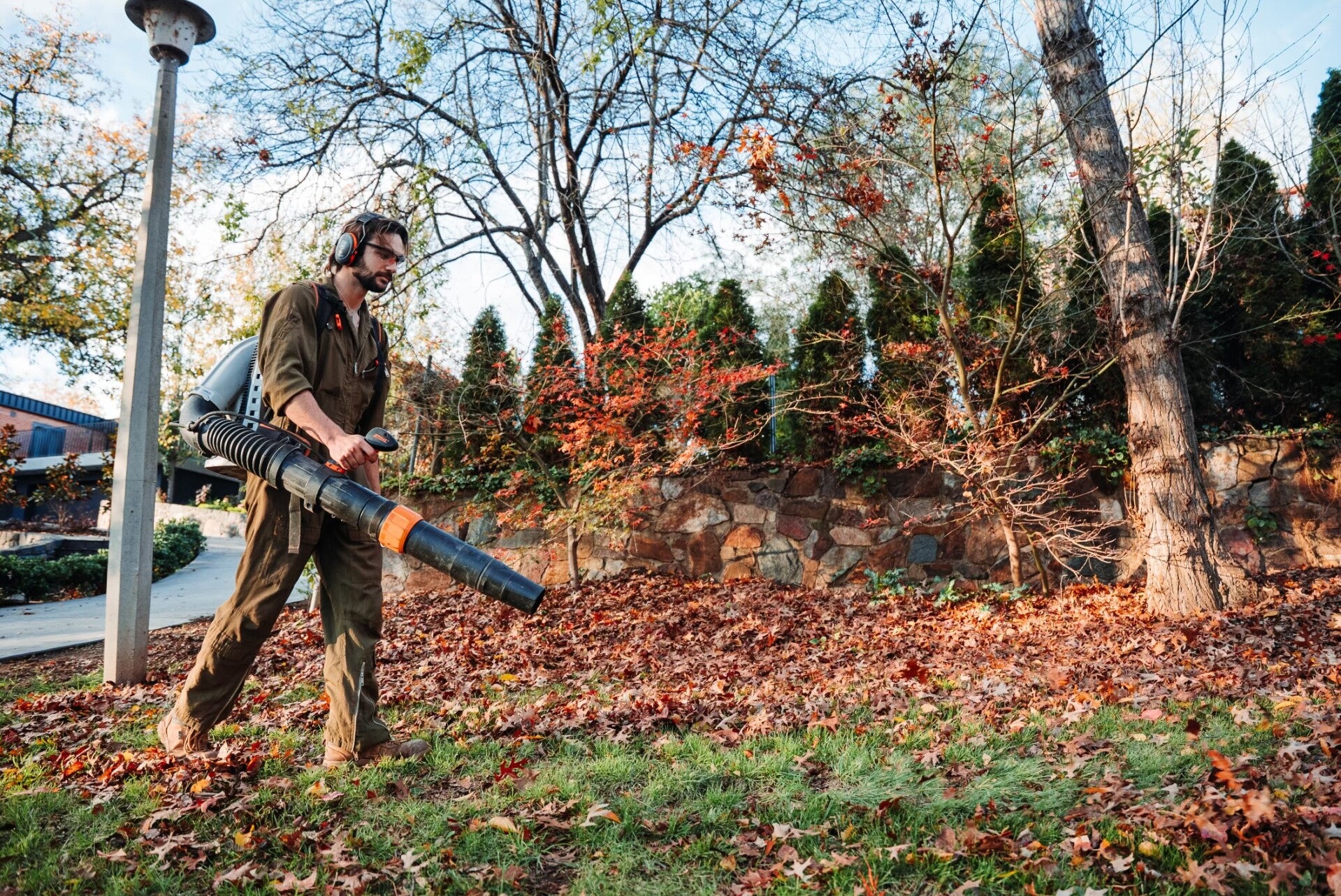
The aftermath of autumn shed, and winters first frosts can leave quite a mess of debris, leaves and other old rotten, dead plant materials throughout the garden. A simple garden clean-up of this seasonal green waste can drastically improve the appearance and tidiness of a garden and reduces places for pests and diseases and just as importantly, reduces risk of rot spreading to shrubs and tree stems. In many cases, you may have significantly more waste and debris sitting in your garden beds than you think! For example, just recently we decided it was time to clear at least 5 year’s worth of leaves and debris from under our front hedge. What we thought was just a few centimetres deep if leaves turned out to be at least 10cm deep of rotted leaves and other debris which filled x two 1000L waste bags! The most efficient way to clear this sort of waste from your garden beds is to use sturdy rake and firmly rake the debris away from your garden bed, then use a leaf grabber or a wide mouth shovel or grain scoop to shovel the waste away into your waste bags or green bins.
Now is also the best time to dead head spent flowers from the summer and autumn. Simply snip away dead, spent old flowers with a sharp pair of secateurs. Another easy clean up task is to pull up dead annuals like petunias, marigolds, begonias and zinnias.
- Clean, Sharpen and Service Garden Equipment
One of my favourite, oddly satisfying winter gardening tasks is giving all my gardening equipment a thorough clean, sharpen and service. Cleaning your equipment doesn’t need to be complicated and can be done in a few simple steps.
For hedge trimmers and hedge shears, give the blades and joints a generous spray of WD40 or STIHL Superclean. Run powered hedge trimmers for around 30 seconds to allow the lubricant to work its way into the blades and moving parts. Let it sit for ten minutes to loosen sap, debris and surface rust. Fill a bucket with hot water and a few drops of dish soap and use a stiff-bristled brush to scrub away any remaining grime. More stubborn residue can usually be removed with steel wool. Finish by applying a light coat of blade oil to protect the metal and reduce future corrosion.
As for lawn mowers, winter is a great time to remove built-up grass from under the deck, sharpen or replace blades, check air filters and inspect spark plugs. If you use battery-powered equipment, inspect batteries and chargers for damage and ensure everything is clean and stored in a dry location.
Likewise, with many power tools seeing less use during winter, it is the perfect opportunity to organise a professional service or carry out any maintenance you’ve been putting off. Winter is generally a quieter period for many repair workshops, making it easier to have equipment serviced before the busy spring season arrives.
Sharp, well-maintained tools make cleaner cuts, reduce strain on plants and significantly improve the lifespan and performance of your equipment. A few hours spent maintaining your tools now can save a lot of frustration when spring growth explodes back into action.
- Plant Cool-Season Vegetables
There is something incredibly satisfying about harvesting fresh broccoli, spinach or silver beet from your own garden on a frosty Canberra morning. Just because winter has arrived doesn’t mean your vegetable garden needs to be put on hold. In fact, many vegetables thrive in Canberra’s cool conditions and often perform better through winter than they do during the heat of summer. Some excellent vegetables to plant during winter include garlic, onions, broccoli, cauliflower, cabbage, kale, spinach, silver beet, broad beans and peas. These crops generally enjoy the cooler temperatures and often produce sweeter, more tender growth than they would during warmer months.
One of the most rewarding aspects of winter vegetable gardening is that many crops will continue developing throughout winter before bursting into strong growth in early spring.
- Plan Future Landscaping Projects
Winter is the perfect planning season for larger landscaping projects. Some of the most successful garden transformations begin with nothing more than a notebook, a rough sketch and a winter afternoon spent walking around the garden imagining what could be. A little planning now can completely transform how your garden looks and functions for years to come. With plants dormant and foliage reduced, it becomes much easier to assess the structure of your garden and identify areas that need improvement. Whether it be an empty corner where a feature tree is needed or garden bed needing a new border or retaining wall, winter provides the opportunity to carefully evaluate these issues without the distractions of rapid seasonal growth. Many larger projects also benefit from being completed before spring arrives. Installing new garden beds, trees, hedges and hard landscaping during winter allows everything to establish before the heat of summer returns. By planning ahead, you can avoid the spring rush and ensure your garden is ready to thrive when warmer weather arrives.