The Art of the Living Wall
By Jesper Ginnivan
Founder, Ginnivan Gardening
'From Boston Ivy draped brick walls and masonry to fragrant star jasmine covering old fences, a living wall can transform even the harshest structures into lush garden centrepieces. Drawing on years of experience cultivating climbers in Canberra, this article explores how to create beautiful vertical gardens in our unique climate.'
Climbing plants have always been an obsession of mine. I vividly remember buying my first plant in my early teens - a grapevine, which I planted on what was previously an ugly and bare fence line. Within four years, this fence became one of the lush centrepieces of our garden. By year five the grapevine had engulfed the fence almost entirely, giving year-round colour and character to what was once our garden’s biggest eyesore. Summertime showcased fresh lime green leaves followed by a deepening of colour to darker green in the later summer accompanied by droves and droves of grapes. Autumn brought fiery shades of red and orange followed by the winter shed which revealed strong networks of branches with unique, artistic bark which is so characteristic of grapevines. Years later, I decided it was time to transform our north facing, large brick wall into a ‘living’ wall. Inspired by the Ivy League universities I saw during my travels in the United States with their humungous walls covered with lush climbers, I was intent on creating the same thing for our wall. Likewise, seeing stone and brick walls in both urban and rural Europe covered with a large variety of different climbers from Hydrangea petiolaris, clematis to Boston ivy, this only deepened my interest in creating living walls.
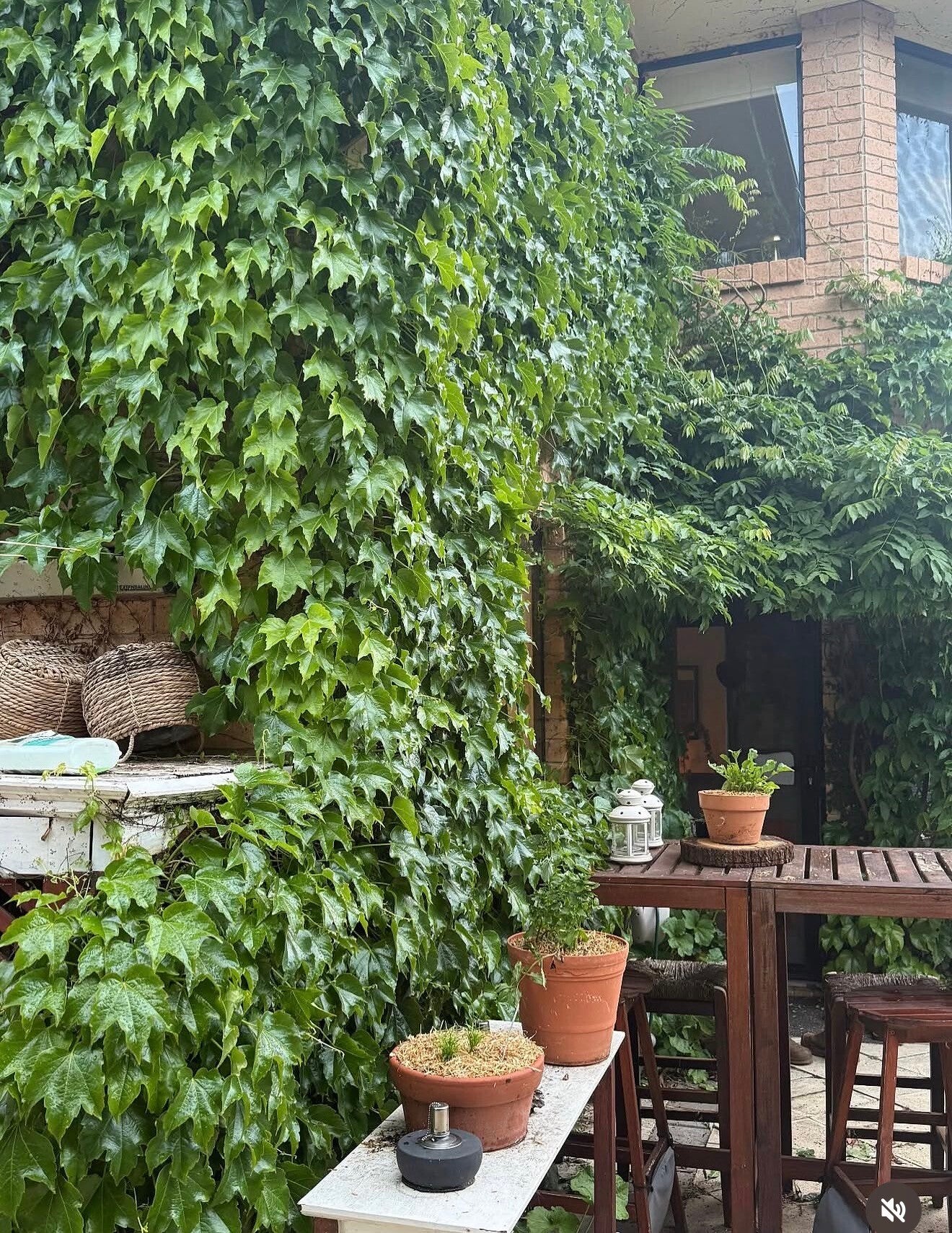
In 2017 I planted a Boston Ivy (Parthenocissus tricuspidata) at the base of our hot, bare north facing brick wall. Nine years later, it is the main centrepiece of our garden. Tightly trimmed every few weeks through the summer months, it covers our wall entirely and has greatly elevated the aesthetic of the area and added a lush vibrancy and character with a dazzling display of colours through each season. I was fascinated to learn years ago that different varieties of climbers were used to cover homes and cottages in medieval Europe to provide natural insulation to homes and shelter from cold and heat extremes. Centuries later, such climbers are now used to add prestige and character to the most beautiful structures and gardens around the world. Beyond their aesthetic appeal, living walls can also provide valuable ecological benefits. Dense climber growth can create habitat and shelter for birds, beneficial insects and pollinators, while helping to soften urban environments and increase overall greenery. During Canberra’s hot summers, a well-established living wall can also help shade walls from direct sunlight, reducing heat absorption and creating a noticeably cooler microclimate around the home and garden, in fact - during the worst of Canberra's heatwaves in recent years, the Northside of our house is distinctly cooler than any other area of the house! So, both practicality and aesthetically, a living wall can be a strong addition to your garden.
Interestingly, ‘living’ walls are few and far between in Canberra. For that matter, I haven’t seen many at all in the rest of temperate Australia. The most notable living wall I can think of is the glorious Boston ivy which covers Canberra Grammar school in Red Hill. With careful plant selection and awareness of planting positioning, sunlight and adequate care, there is no reason why a living wall can’t be successfully achieved here.


Choosing the Right Climber
First and foremost, having an idea of what aesthetic you have in mind for the wall in question is a strong starting point. There is an abundance of both evergreen and deciduous climbers all with their own unique traits and appearances. If you're like me, and you don’t mind a climber that will be bare and dormant during the chillier months, deciduous climbers can become a stunning feature to any wall or fence bringing unique charm to each season, often putting on a display of incredible autumn colours and lush foliage or long flowering cycles through the warmer months. For me, nothing beats the anticipation of the explosion of light lime green foliage on a Boston Ivy in the spring and early summer, which more than makes up for its winter dormancy. Alternatively, if you are intent on year-round lush foliage, evergreen climbers are the no brainer option - from the vanilla scents of star jasmine flowers and its deep rich green foliage to the lush and artistic creeping fig, we are spoiled for choice in temperate Australia, and most specifically, Canberra.
Each climber brings its own growth speed and aggressiveness which should be heavily considered before choosing your plants along with a good idea of how large or small your wall or fence is. A Chinese Wisteria is one of my absolute favorite plants and is unparalleled in its beauty (See the old senate gardens in spring!) but is a notoriously aggressive plant that will quickly swallow up old fences or damage roof gutters if not pruned regularly diligently kept under control. On the opposite end of the spectrum there are slower, more delicate and less aggressive climbers like large flowering Clematis Jackmanii which may not even grow beyond a meter or two tall and wide. A sensible first step is to ask yourself how much time you are willing to put in to maintain your living wall and choose your planting accordingly.
Understanding Sunlight & Positioning
The most successful living walls and fences I have cultivated — both for clients and in my own garden — have usually been in a north-facing aspect. In Canberra terms, this means plentiful sunlight, warmth and full exposure to the elements. For a vast range of climbers, these conditions provide an ideal environment for vigorous growth and strong seasonal colour.
This is not to say climbers cannot thrive in shadier south-facing locations. Many certainly can. However, the selection pool becomes smaller and often requires more thoughtful positioning and care in order to achieve the same success as a north facing location.
If the climber seedling you are planting is still quite small, it will naturally be more vulnerable to frost and harsh weather conditions during its establishment phase. When planting during the colder months — often recommended for deciduous climbers — it is worth keeping a close eye on overnight temperatures during the first few months in the ground. If temperatures are forecast to drop below freezing, placing an old pillowcase, frost cloth or cotton bag over the seedling overnight can help protect delicate new growth from frost damage.
Walls, fences and paved surfaces can radiate significant amounts of heat throughout summer, particularly in north and west-facing aspects. While many climbers thrive in these warmer conditions, some softer or shade-loving varieties may struggle if exposed to excessive reflected heat during the peak of summer.
Canberra’s strong winds and sudden cold changes can be particularly harsh on young climbers during their establishment period. Providing some initial shelter and ensuring the plant is securely tied to its support structure will help encourage stronger, healthier growth over time.
Like most plants, climbers will reward good soil preparation. Before planting, incorporate a deep application of quality planting compost and organic matter into the soil to improve drainage, moisture retention and overall soil health. Healthy soil during the establishment phase will often determine how vigorously and successfully a climber develops in the years ahead.


Supporting Structures & Training
Some of the most stunning ‘living wall’ climbers require no support at all. In fact, one of the most popular climbers (and my personal favourite) is Boston Ivy, the very same species of vine that has transformed our north facing wall from boring bricks to a garden centrepiece. Climbers such as Boston Ivy, Virginia Creeper, Silver Veined Creeper, climbing fig, to name just a few, require only some gentle guidance in the beginning stages towards the wall. These varieties of climbers often use self-adhesive discs or ‘pads’ to grip on to the wall or fence line. And once they’ve taken hold, they require very little further guidance. However, like most things beautiful - there is a catch! Self-adhesive climbers will leave remnants of their adhesive pads on walls or fences if you decide to remove the climber. These pads can leave a spotted appearance to expanses of brickwork and fence lines and can be tricky to remove. So, in every sense, choosing a self-clinging climber for your wall or fence should always be a long-term commitment.
Alternatively, many climbers require some sort of support to direct their growth towards the wall or fence indefinitely. Climbers such as the stunning native Hardenbergia or trumpet creeper vine or almost any variety of wisteria require wiring or trellises for the main shoots to consolidate themselves tightly against the fence or wall. These support mechanisms can be as cheap and simple as hammering in concrete nails into mortar between gaps in brickwork and then tying a network of steel wire in the pattern you prefer the climber to grow. Other alternatives can be DIY bespoke trellises or prefabricated wall trellises from hardware stores (Bunnings sells quite a few, last time I checked). While these climbers do not have the self-adhesive mechanisms as the climbers mentioned above, as these climbers mature (such as wisteria or star jasmine) these climbers secure themselves to the trellis and eventually require little to no guidance. Other varieties such as trumpet creeper vine or Hardenbergia require more constant assistance in their foundational years to conform to the trellis or wiring.
The advantage of climbers requiring more support is that, from my own experience, they are easier to keep under control so they do not run rampant. For all the beauty of a self-clinging Boston Ivy, its growth rate can be very vigorous through the warmer months and requires frequent pruning away from roof gutters and around windows. Conversely, a Hardenbergia or trumpet creeper will largely conform itself to the trellising that has been established.
Maintenance & Long-Term Care
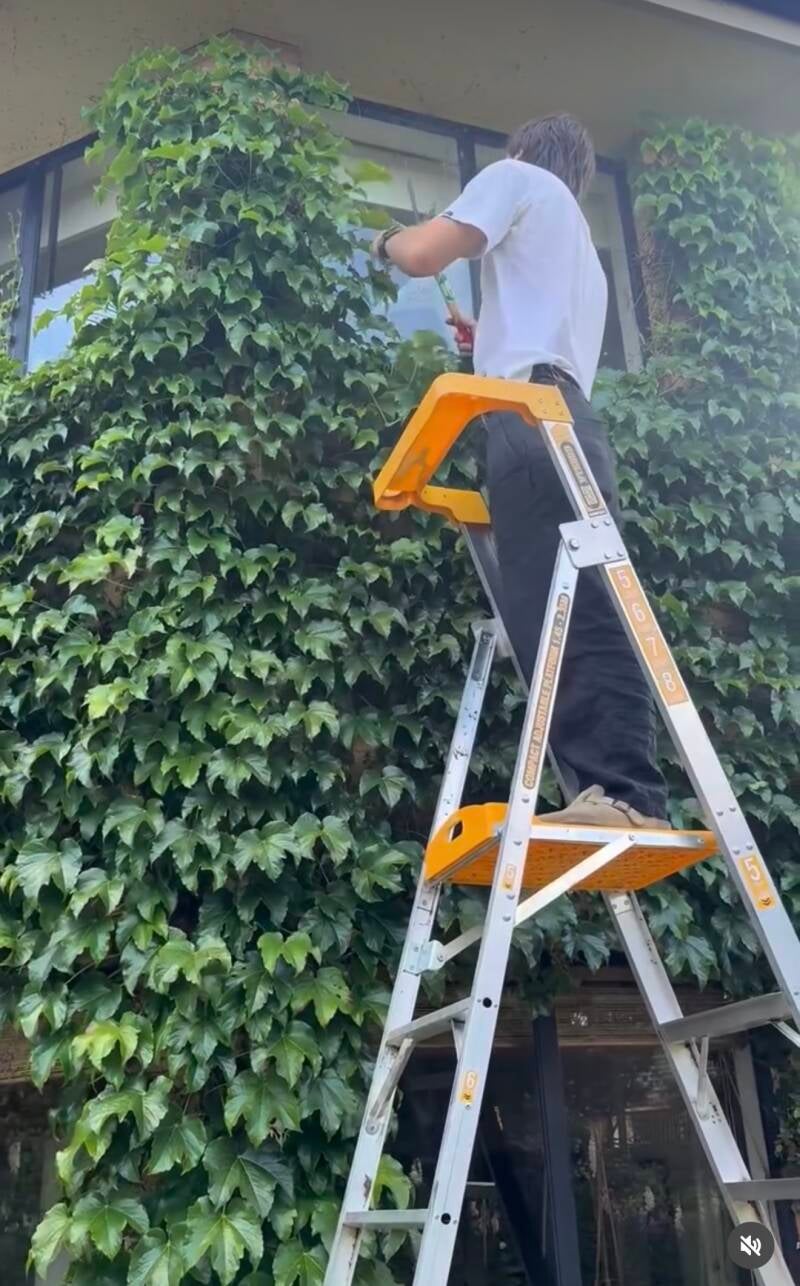
With my Boston Ivy, I ensured I was well aware of the maintenance requirements before planting it. For vigorous self-clinging climbers like Boston Ivy, pruning for density usually isn’t necessary. It forms dense lush coverage perfectly fine on its own with very little assistance. Simply keeping it trimmed to the wall area or fence you want the climber to conform to is the higher priority. During the summer months, particularly early summer and late summer when our Boston Ivy has its most growth surges, we remain diligent in trimming any growth back from our windows and from our roof gutters, maintaining a tight, trim and neat appearance. Likewise, I have seen Chinese Wisteria put on up to 8 metres of aggressive growth in a single season. Rambling roses such as Banksia rose can also be incredibly demanding to keep under control. With fast growth comes great responsibility and all vigorous, deciduous climbers should be kept in check accordingly with frequent trimming. For slower growing evergreen climbers like creeping fig, climbing hydrangea or star jasmine, they like to behave themselves a lot more than the climbers mentioned above and have much more moderate growth rates, entailing less frequent maintenance requirements.
Due to Canberra’s largely poor soil conditions (aside from select pockets of old established suburbs in inner Belconnen or central Canberra) and dry and hot summers, deep and frequent watering is crucial in the early stages as your climber matures and takes root in its position. While its root system is still developing and unable to extract moisture from deeper areas in the soil, regular deep watering is necessary. Once the plant has firmly established itself, after a few years, such regular watering is less necessary. Our Boston Ivy now receives one or two deep waterings per week which is generally more than sufficient. Inversely, softer, shade loving climbers such as climbing hydrangea and most varieties of Clematis which are accustomed to milder summers require diligent watering even when mature and often require shady, cool conditions at their base with a clear pathway upwards to grow up towards the light - simulating the forest conditions that they naturally thrive in.
While most climbers are not especially fussy feeders once mature, regular fertilising during the establishment phase will greatly improve growth speed, foliage density and overall health. I personally prefer regular applications of liquid Seasol and organic compost over excessive use of strong synthetic fertilisers, which can sometimes encourage overly soft, vulnerable growth.
Equally important as watering is keeping the bases of your climbers generously mulched to keep moisture locked into the soil profile and suppress surrounding weeds that could compete with their root systems.

Ginnivan Gardening’s Living Wall Top Picks:
Boston Ivy (Parthenocissus tricuspidata)
Without question my favourite climber for creating a dramatic living wall in Canberra. Vigorous, hardy and spectacular through every season, Boston Ivy transforms bare brick and stone into lush vertical structure before erupting into fiery shades of crimson and orange in autumn. Once established, few climbers rival its ability to create a sense of age, prestige and atmosphere within a garden.
Star Jasmine (Trachelospermum jasminoides)
There is good reason why Star Jasmine is so commonly found in Canberra gardens. It is an elegant evergreen climber prized for its rich green foliage and masses of fragrant white flowers through the warmer months. Compared to more aggressive climbers, Star Jasmine is relatively well-mannered and easy to maintain, making it an excellent choice for smaller walls, fences and courtyards where year-round greenery is desired.
Creeping Fig (Ficus pumila)
One of the most beautiful evergreen climbers for creating a dense, tightly clinging “green wall” effect. Creeping Fig forms intricate layers of small foliage that soften harsh walls and fences beautifully. Best suited to sheltered locations, mature plants can create an almost European or Mediterranean character when kept tightly trimmed.
Hardenbergia (Hardenbergia violacea)
A stunning Australian native climber with cascading sprays of purple, white or pink pea-shaped flowers through winter and early spring. Hardy, elegant and well suited to Canberra’s climate, Hardenbergia provides a softer, more naturalistic alternative to some of the heavier deciduous climbers.
Climbing Hydrangea (Hydrangea petiolaris)
One of the most refined and understated climbers for cooler and shadier areas of the garden. Slow growing but immensely rewarding with time, Climbing Hydrangea produces delicate lacecap flowers and beautiful textured growth that lends itself perfectly to old walls, shaded courtyards and woodland-style gardens.